Monday, April 29, 2013

Star-Wars


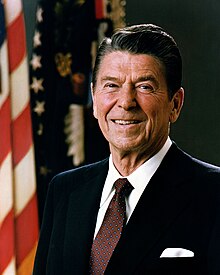
      Mikhail Gorbachev was the first and last president of the Soviet Union from 1988 until 1991.  Gorbachev was in power during Ronald Reagan’s time as President of the United States.  The two conversed several times about reducing the amount of nuclear weapons under each countries arsenal.  At a time when the Cold War was still being ‘fought’ this was possibly the best Soviet-American relationship among leaders. The two leaders met in Iceland and almost ended the Cold War, almost.

      Gorbachev and Reagan met in Reykjavik, Iceland in October of 1986.  The two dies met for two days and made substantial progress in negotiations.  They got to a point where both sides would reduce the number of ballistics missiles.Gorbachev was risking a lot but making negotiations but had to for the future growth of his country.  The Soviet Union could not compete in an arms race as the nations economy was severely struggling.  The Soviets proposed to eliminate 50% off all of their strategic arms which included ICBMs (intercontinental ballistic missiles).  The sticking point was something out of Reagan’s fantasies.  The “Strategic Defense Initiative” or SDI was one of the reasons why the two sides could not come to an agreement.  This “Star Wars” (a nickname for the project) type space station was something Reagan thought would be able to keep the United States safe from all further attacks.  It was something Gorbachev saw as a potential weapon and felt as if space should not be weaponized.  The SDI program allowed the Cold War to continue for years longer[1].


[1] Oliver Stone, and Peter Kuznick, The Untold History of the United States, (New York: Gallery Books, 2012), chapt. 12.


CONTRAry Beliefs


Ronald Reagan served as the 40th President of the United States from 1981-1989.  Reagan was preceded by President Jimmy Carter, a man who the American public perceived as a narcissist, and Reagan was supposed to be the countries saving grace. As Reagan’s economic plans, later deemed ‘Reaganomics,’ seemed to be boosting the economy, other things were growing behind the scenes.  As Americans were being held hostage in Iran, the Reagan administration developed a plan to help free the seven hostages.  The true plan did not come to light until November 1986 though.

       The true story behind the Iran-Contra affair is an eyeopening event that allows one to see just how secret the government can be.  The Reagan administration decided to sell arms to Iran in exchange for the hostages, something that President Reagan later denied, even though the truth has come to fruition.  The government had multiple motives for selling arms to Iran.  The hostage situation was the ‘cover,’ even though it was top secret that this was going on anyway.  Once the government completed the transactions they funneled the funds through Swiss bank accounts. Why? This is perhaps the sneakiest part of the entire operation. The funds were hidden from congress so that the administration could fund a group in rebel group in Nicaragua called the Contras.  The United States was not supposed to be meddling in the foreign affairs of other countries, especially in the Middle East and Latin America because of the Cold War implications it could have caused with Russia.  But nonetheless the Contras  were funded by the Americans as well as given military aid. 
All of this came to the surface on October 5, 1986 when the Sandinistas (those who the Contras opposed) shot down a plane manned by Americans carrying supplies to the Contras[1].


[1] Oliver Stone, and Peter Kuznick, The Untold History of the United States, (New York: Gallery Books, 2012), chapt.11


Thursday, April 18, 2013


                Today we are still fighting for the rights of gays and lesbians in this country.  The origin of the fight is an interesting story.  One man can be said to have truly sparked the gay rights movement and that man was Harvey Milk.  Harvey Milk was the first openly gay person to be elected to public office in the state of California when he was elected to the San Francisco Board of Supervisors[1].

                Harvey did not run on a platform of only gay rights but also pushed for increased child care and education.  He even had an ordinance passed that would fine people who did not clean up after their dogs in public areas.   But Milk’s greatest victory was the defeat of proposition 6.  Proposition 6 was set forth by John Briggs and it would have forced any openly gay teacher to be removed from their position.  At the early stages of the voting it was a landslide to go through but after several debates in which Harvey participated in the numbers started to even out.  Eventually when the votes were tallied, proposition 6 did not pass.  This was a great victory for all gays and lesbians because they could now “come out” and would not have to fear losing their jobs. 

                Harvey Milk did great things in his short time in office.  He served 10 months before being brutally assassinated along with Mayor Mascone by former Supervisor Dan White.  His murder was tragic loss not only to the gays and lesbians but to the city of San Francisco.  After the infamous “Twinkie defense” Dan White served a total of 5 ½ years in prison for committing both murders.


[1] Milk Foundation, "The Harvey Milk Foundation." Last modified 2013. Accessed April 18, 2013. http://milkfoundation.org/.

Wednesday, April 10, 2013

A Revolutionary Hugh


                It is hard to say when the sexual revolution in America really began but we can say that the 1950’s were a very important time, possibly even the catalyst or spark to the entire revolution.  The revolution could be a spin-off of the work of one man and his magazine.

                Born April 9, 1926 in Chicago, Illinois, Hugh Hefner would later become one of the most recognizable men America has ever known.  Hefner is the founder of Playboy Magazine, a magazine that was way ahead of its time.  The magazine showed pictures of nude females or as Hefner described it, “[Playboy] encouraged readers to enjoy the pleasures a female has to offer without becoming emotionally involved[1]”.  In December of 1953, Hefner published the first issue of Playboy which featured nude photographs of superstar Marilyn Monroe.

                The circulation of the magazine grew rapidly as it reached 1 million before the end of the 1050’s and even reached 6 million by 1970, with almost half of the readers being single men.  Hefner grew is nude magazine into a sexual and financial empire as his peak net worth breached $200 million[2].

                Hefner is a sort-of cultural icon in this day in age.  He’s “The Hef’ and lives in a mansion with some of the most physically attractive females on the planet.  But in his beginning days he was a pioneer.  He and other can be given credit for starting the sexual revolution which took full swing through the 1960’s and 1970’s.  Our culture would not be the same today without Hugh Hefner and the other pioneers of the sexual revolution.


[1] John D'Emilio, and Estelle B Freedman , Intimate Matters: A History of Sexuality in America, (New York: Harper & Row Publishers, 1988), 302-303.
[2] Warner, Brian. "Celebrity Net Worth." Accessed April 10, 2013. http://www.celebritynetworth.com/richest-businessmen/ceos/hugh-hefner-net-worth/.

Monday, April 1, 2013

Women for a Change


                America has a history of change.  We were founded because citizens of England and other European countries wanted a change from their king; and when they were not granted these changes they lead a revolution.  The largest issues this country has seen in its relatively short lifespan have spawned because of oppression: from the early settlers to racial equality and the emergence of Feminism in the 1960’s.

                After the passing of the 15th Amendment which banned the discrimination of race voting women across the country rose up and wanted to be heard.  For too long women had been secondary to men and in a land of “free” people it was time to change this.  Alice Echols describes it best as, “Nothing short of radically transforming society was sufficient to deal with what they were discovering: that gender inequality was embedded in everyday life.[1]” Many brave women such as Betty Friedan, Gloria Steinem, and Phyllis Lyon led the movement and paved the way for the world we live in today[2].  I won’t say that today’s world provides a completely equal playing field for men and women but we stand much closer to that reality today than we did in the 1960’s and that is because of the hard work and dedication of these women.  We are now in an age where women can serve on the front lines of the battlefield, which to me is an incredible step forward.


[1] Alice Echols, "From the Feminine Mystique to "Second Wave" Feminism," Major Problems in American History Since 1945, ed. Robert Griffith and Paula Baker (Boston: Wadsworth, 2007), 299
[2] The City University of New York, "Women's Leadership in American History." Accessed April 1, 2013.